Beyond the Forecast: Outdoor Signs That Earn Their Keep in UK Weather
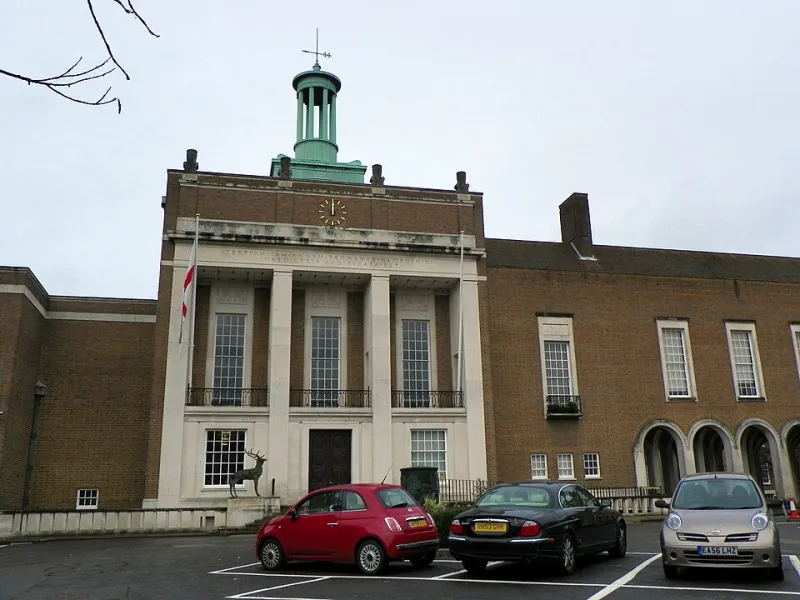
Photo: Peter O'Connor aka anemoneprojectors, CC BY-SA 2.0, via Wikimedia Commons
Outdoor signage in the UK rarely gets a quiet life. A forecourt sign can face horizontal rain on Tuesday, a gusty Saturday market, and a fortnight of high UV in July—sometimes all in the same month. For marketers specifying pavement signs, building fascias or event graphics, the question is not whether the weather will test the print. It is how soon the edges lift, the colours fade or a fixing pulls loose. The answer usually sits in the substrate, the laminate and the fixing method—not in the artwork.
Start with the job, not the material
Before comparing Foamex with aluminium composite, sketch the sign’s working life. Will it sit outside for three weeks or three years? Is it handled daily or fixed once? Does it face driving rain, coastal salt, city grime or direct afternoon sun? A short-term event board and a forecourt totem need different answers. UK conditions also vary more than a single national spec suggests: coastal towns deal with salt-laden air, northern and western sites get more wind-driven rain, and city centres add pollution and cleaning chemicals. A material that works on a sheltered high street may struggle on an exposed retail park.
Laminated vinyl: flexible, printable, exposed at the edges
Printed vinyl remains the workhorse for outdoor graphics, but the laminate matters as much as the print. Cast vinyl conforms better to curves and rivets than calendared vinyl, and a quality overlaminate protects ink from UV, water and handling. Gloss laminate is easy to wipe clean; matte hides scuffs but can show marks. Anti-graffiti laminates help in city centres, though they add cost. The weak point is nearly always the edge. Water gets under a lifted corner, then freeze-thaw cycles do the rest. Specify rounded corners where possible, avoid edges in standing water, and make sure the applicator post-heats edges properly. Vinyl applied in cold weather needs the right surface temperature—not just a warm afternoon—so plan installation for a dry day above the product’s minimum.
Foamex: light, stiff and easy to over-specify
Foamex—rigid PVC foam board—is popular for short-to-medium-term signs because it is light, smooth and prints well. It is not a structural material. A large Foamex panel needs a frame or support, and fixings should use washers or stand-offs that spread the load rather than over-tightened screws. Leave a little room for expansion. Edges can chip or absorb water if left unprotected, so sealed or framed edges are worth considering for longer outdoor use. UV-printed Foamex with a protective laminate is fine for many pavement signs and event panels; a thin, unframed sheet bolted to an exposed wall is asking for trouble.
Aluminium composite: the long-game option
Aluminium composite material, often known as ACM or by trade names such as Dibond, gives a flatter, more stable panel for fascias and forecourt signage. It resists warping better than foam board and handles temperature swings well. It can still dent, and cut edges need attention: use a closed-cell or sealed edge where water might track in. Fixing method changes the lifespan. Rivets, concealed channels and stand-off fixings each suit different walls and wind loads. For a building fascia, ask the installer how the panel is restrained, not just how it is attached. A beautiful print on a weak bracket is a maintenance job waiting to happen.
Fabric and mesh: when wind is the main event
For outdoor events, tensioned fabric and PVC banners are often more practical than rigid panels. Mesh banners let wind pass through, reducing load on fences and frames; solid banners need stronger fixings and better ballast. Hemmed edges, eyelets and bungee ties should be specified as a system. A banner that flaps against a wall will abrade quickly, so leave a small gap or use a frame. Fabric graphics can look sharp on temporary structures, but check the fire and weather performance required by the venue.
Fixings, ballast and the honest wind rating
Pavement signs are a classic weak spot. A-base signs need enough ballast for gusts, not just average weather, and should be sited away from exposed corners. Wall signs need fixings suited to the substrate—brick, render, cladding and glass all behave differently. Cable ties are not a wind strategy. Use the manufacturer’s rating, allow for local exposure, and inspect after named storms. If a sign moves in normal gusts, it needs a better fixing before it becomes a repair bill.
Maintenance checks that pay for themselves
A quarterly walk-round is cheaper than replacing a fascia. Look for lifted edges, water marks behind vinyl, rust streaks from fixings, faded reds and yellows, mould in shaded corners and loose brackets. Clean with mild soap and water; avoid jet-washing near edges. Keep a simple log of install date, materials and fixing type. When a sign starts to fail, replace the panel or the fixing before water gets into the structure.
Specification checklist
- Match expected lifespan to material: short campaign, vinyl or Foamex; long-term fascia, ACM.
- Use cast vinyl and a suitable overlaminate for curved or riveted surfaces.
- Protect cut edges and avoid standing water.
- Choose fixings for the wall, the wind exposure and the sign weight.
- Book installation for dry conditions within the product’s temperature range.
- Inspect edges and fixings after storms and at seasonal changes.