Green Is Not a Material: Backing Up a Sustainability Claim Before Someone Else Checks It
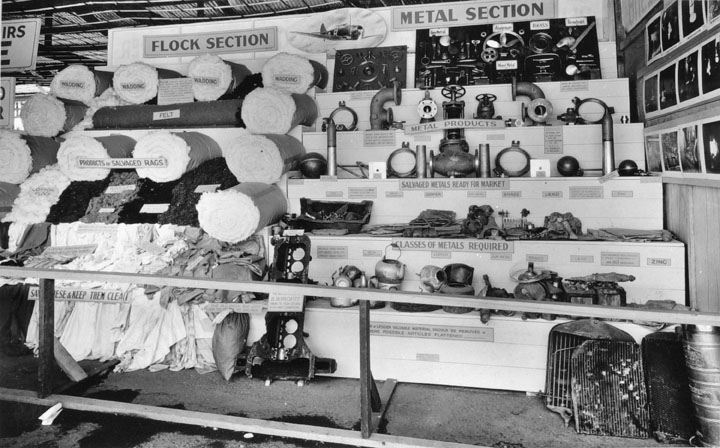
Photo: Agriculture And Stock Department, Publicity Branch, Public domain, via Wikimedia Commons
Here is an unpopular observation. The sustainability wording on most print and display specifications is decoration. It is the sentence added at the end of a brief so the deck has a green slide, and it is usually the only sentence nobody has tested.
That has been survivable for years. It is getting less survivable. The CMA's Green Claims Code pushed UK marketers towards claims that are truthful, clear and substantiated rather than vague and aspirational, the ASA has taken a dim view of soft environmental language, and procurement teams at larger retail and venue groups now ask for evidence as a matter of routine. Add the direction of travel in EU legislation and the net effect is simple: if you cannot evidence a claim, do not print it.
So far, so obvious. The harder question is which materials actually hold up under that scrutiny — because a lot of the ones wearing the greenest labels are not the ones that perform best.
What the labels really say
FSC and PEFC. These are chain-of-custody certifications for wood fibre. They tell you where the pulp came from. They tell you nothing about the plastic laminated to it, the energy used in manufacture, or what happens to the board at end of life. A paper-faced foam board can carry an FSC mark and still be half polystyrene by weight. That is not dishonesty — it is a narrower claim than people assume.
100% recyclable. Almost every substrate is technically recyclable given the right facility. The useful question is whether it is recyclable through a route your customer or your waste contractor can actually access. A material that needs a specialist stream 200 miles away is recyclable in theory and landfill in practice.
Biodegradable. In a sealed, anaerobic landfill cell, very little biodegrades on any timescale that matters. This word does almost no work in a display context and is best left out of customer-facing copy altogether.
PVC-free. Genuinely meaningful, because PVC is a difficult material at end of life and the UK has limited takeback. But ask what replaced it. A lot of PVC-free banner is polyethylene — tougher to print on in some processes, and recyclable only where LDPE collection exists, which is not kerbside for most of the country.
Recycled content. Ask pre-consumer or post-consumer. Pre-consumer is factory offcut, which is nice but easy. Post-consumer is the number worth quoting, and the one a procurement team will actually probe.
Carbon neutral. Usually an offset purchase. Sometimes a legitimate one. Ask for the tonnage and the methodology, or leave it off the artwork.
Reusable. Dull, unglamorous, and almost always the strongest claim in the room — and the one least likely to appear on a graphic.
Four questions that do the work
We use a short test on every material spec, and it filters out most of the noise.
- Is there a written specification? A datasheet with material composition and recycled content figures, not a brochure with a leaf icon.
- Does it end well, here? Not in principle — in the UK, through a route someone will actually use. If the answer is we will look into it, the claim is not ready.
- Does it perform? Durability is the most underrated environmental argument in display. A banner that survives six events beats three banners that each fail after one, no matter what the label says.
- Is the claim specific enough to be checkable? Contains 70 per cent post-consumer recycled PET, recyclable via [named scheme] is a claim. Eco-friendly is an opinion.
Where the trade-offs genuinely are
It would be dishonest to pretend there is a drop-in green replacement for everything. There is not.
Banner material. PVC banner is cheap, UV-stable, weldable and near-impossible to recycle domestically. PE alternatives have improved a lot and print well on UV and latex kit, but opacity and drape are not always equivalent, and they still need a collection route. For anything used more than twice, a tension fabric graphic with a silicone edge is often the better answer — it folds, travels, washes and gets reused, which beats any material swap.
Rigid boards. Foamed PVC is the default for a reason: light, rigid, printable, cheap. Polypropylene and PETG are credible alternatives with better end-of-life stories, though fixing methods and print adhesion need checking with your fabricator. Engineered cardboard — honeycomb or paper-honeycomb panels — is genuinely impressive now and reads as sustainable to a customer without needing a badge, but it is heavier, it needs different fixings, and it dents.
Acrylic. PETG does much of the same job with a better recycling story. Ask whether your supplier will actually take it back.
Foam board. If it is going in the bin after one event, the material choice barely matters. If it is being reused, the frame and the fixing are what determine its life, not the board.
The check nobody runs: fire
Public buildings, exhibition halls and shopping centres all have fire performance requirements, and they are typically expressed in Euroclass terms. Some of the most sustainable-looking boards on the market sit well below the classification a venue will accept. A material that cannot get through the door has no environmental story worth telling. Ask for the classification up front, in writing, alongside the recycled content figure.
How to write it into the brief
A short clause does more than a paragraph of aspiration. Ask every supplier to state, in the quote: material and composition, post-consumer recycled content, end-of-life route available in the UK, fire classification, and whether a takeback or rental option exists.
Then apply the answer. If a supplier cannot complete five lines, that tells you something useful about the claim you were about to print.
The honest position
The most defensible sustainability strategy in display right now is not a material. It is reuse: fewer graphics, better made, stored properly, used again. Specify a bit better, buy for the second and third use rather than the first, and stop printing claims you cannot evidence on the back of an envelope.
Customers are not asking for perfection. They are asking not to be misled — and increasingly, so is everyone else.